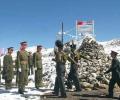
Many of them sustained minor injuries in the clash near Naku La in the Sikkim sector along the Sino-Indo border on Saturday
The enhancement of combat capability by the two armies in the region came even as both the countries continued their efforts to resolve the dispute through talks at military and diplomatic levels.
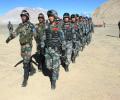
Singh said a meeting between senior Indian and Chinese military leaders has been scheduled for June 6 even as he asserted that India is not going to back off from its position. Asked about the current situation in sensitive areas in eastern Ladakh, he said Chinese have come up to what they claim is their territory while Indians believed it is theirs.

The last conversation between the two leaders was on April 4 on the issue of hydroxychloroquine.

The Indian Army has been matching up to the Chinese build up in both Pangong Tso lake and Galwan Valley, the two locations in Ladakh which have witnessed major reinforcement of troops in the last two weeks, sources said. There was very little chance of easing of tension anytime soon as both sides are aggressively holding onto their respective positions, they said.
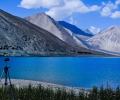
According to sources, the post at which the Chinese army has put up loudspeakers is under 24x7 constant watch by Indian soldiers and it is possible that the Chinese might be indulging in such drama to distract our troops or perhaps just relieve the pressure.
Indian and Chinese troops remained engaged in an eyeball-to-eyeball situation in several disputed areas.

The Indian Army on Friday strongly insisted on early disengagement of troops by China from all the friction points in eastern Ladakh at the eighth round of corps commander-level talks between the two sides that primarily focused on a roadmap for restoration of peace and tranquillity in the region, according to people familiar with the developments.
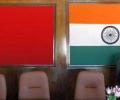
India on Tuesday outrightly rejected as 'senseless' China renaming some places in Arunachal Pradesh, and asserted that assigning 'invented' names does not alter the reality that the state 'is, has been, and will always be' an integral part of India.

The country will not allow any "unilateral action" on its border and will pay any cost to thwart such attempts, he told the Bharatiya Janata Yuva Morcha's state conference.
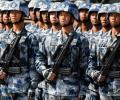
With the Indian Army having blocked the PLA several kilometres inside India, hundreds of soldiers from both sides remain in a tense face-off.
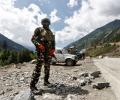
At a virtual media briefing, Ministry of External Affairs (MEA) Spokesperson Anurag Srivastava said disengagement of troops is a complex process which would require mutually agreed 'reciprocal actions'.
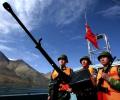
Both the Indian and Chinese armies have brought in more troops in sensitive locations like Demchok, Daulat Beg Oldie and areas around Galwan river as well as Pangong Tso lake in Ladakh, the sources said. The area around Galwan has been a point of friction between the two sides for over six decades.


"The LCA Tejas was deployed by the Indian Air Force on the western front close to the Pakistan border to take care of any possible action by the adversary there," government sources told ANI.

He said there were no signs of an "overt collusion" between China and Pakistan during the Ladakh standoff but India also caters to a long term strategy for not a two, but a two-and-half front war. With the half front, he was referring to the internal security.

K Pazhani of Kadukkalur village served the army for 22 long years and was due to retire in a year.

'Why did your generals try to grab a few square kilometres of Indian territory in Ladakh?' 'And what happened to the hard work that you and Prime Minister Modi put into the Wuhan and Mamallapuram meets?' Claude Arpi writes a letter to Xi Jinping, China's self-styled supreme leader, who turns 68 today, June 15.
Pakistan may want to undertake a 'false flag' operation in J&K to divert attention from the situation in Balochistan and Khyber Pakhtunkhwa but infiltrating one SSG battalion into J&K and having two SSG battalions waiting to follow suit means war, which Pakistan cannot afford in its current economic crisis, notes Lieutenant General Prakash Katoch (retd).
It is learnt that the India's top military brass is constantly monitoring the evolving situation even as the United States said the aggressive behaviour by Chinese troops was a reminder of the threat posed by China.

At least a couple of Chinese military helicopters were spotted flying close to the un-demarcated Sino-India border in the area after the fierce face-off on May 5 following which a fleet of Sukhoi-30 jets of the Indian Air Force too carried out sorties there, the sources said.
The talks between the two armies are going to be held this week at multiple locations including Patroling point 14 (Galwan area), Patrolling point 15, and Hot Springs area, top government sources said.

'Intrusions by PLA troops in the Ladakh sector are more in number than elsewhere and this region is now likely to remain an area of enhanced Chinese interest,' warns China expert Jayadeva Ranade.

The analysis revealed abrupt changes in temperatures occurring in late winter across north India.

India on Tuesday lodged a strong protest with China over its so called 'standard map' laying claim over Arunachal Pradesh and the Aksai Chin, and asserted that such steps only complicate the resolution of the boundary question.
After making incursion bids in Ladakh through land route, Chinese troops have made several attempts to enter Indian waters at Pangong lake nestled in the higher reaches of Ladakh with the latest incident reported on Friday.
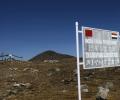
China's Ministry of Civil Affairs on Sunday released standardised names of 11 places for Arunachal Pradesh, which it calls "Zangnan, the southern part of Tibet".
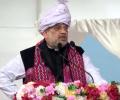
China on Monday criticised Home Minister Amit Shah's visit to Arunachal Pradesh, stating that it violated Chinese sovereignty over the area, a claim outrightly dismissed by India.

India also went on an overdrive in expanding its military engagement with like-minded countries in its neighbourhood and beyond in the face of China's relentless attempts to become a regional hegemon and establish its primacy in South Asia.

The National Security Strategy document should flag all major issues concerning security strategy and provide guidelines to concerned departments to work out suitable action plans. Since the global and regional geopolitical canvas is dynamic, the NSS document should be deliberated at length before formulation and should be reviewed periodically, recommends Commodore Venugopal Menon (retd).

Bagchi said this when asked to comment on remarks by a Chinese diplomat that the situation in the India-China border areas is stable.
The United States has recognised that territory (Arunachal Pradesh) for a long time (as an integral part of India), White House Press Secretary Karine Jean-Pierre said.
The talks would be held in Moldo opposite the Chushul sector in India.
The Indian Army has been slow to react. Indian troops have deployed in the vicinity of PLA incursions, but there are no attempts to outflank Chinese positions.

The deployment of strategic bomber aircraft is also still on by the Chinese

It is time the political leaderships in this country arrived at a common ground over issues of foreign and security policy concerns. There has to be a greater communication between the government and the Opposition leaderships for the nation to present a unified face against the rest of the world, advises N Sathiya Moorthy.
Multiple rounds of talks have failed to yield any significant result in defusing border tensions. The last round of Corps Commander-level talks between both countries were held on November 6, 2020 in Chushul in Eastern Ladakh.
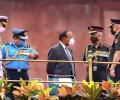
Defence Minister Rajnath Singh is likely to call another high-level meeting later today, they added.
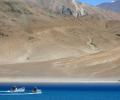
The people familiar with the development said the new bridge is being built in an area that is over 20 km from the Line of Actual Control (LAC).

The meeting came after the Indian Army thwarted an attempt by the Chinese Army to transgress into Indian areas near the southern bank of Pangong Tso near Chushul in Ladakh on the intervening night of Saturday and Sunday.
